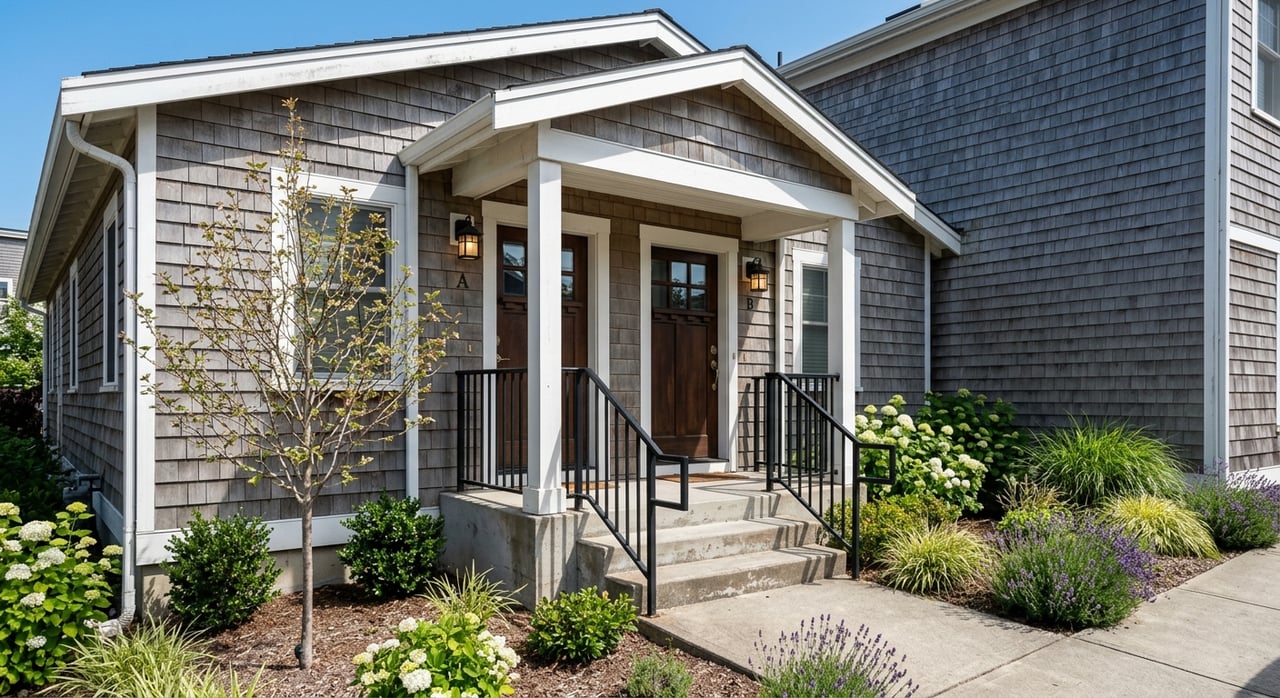
Newport RI Condo vs House for Second-Home Buyers
May 21, 2026
May 21, 2026
Buying a second home in Newport sounds simple until you get into the details. A condo may look easier to own from a distance, while a house may seem like the better long-term fit. In a seasonal market like Newport, the right choice often comes down to how you plan to use the property, what level of upkeep you want, and how local rules affect your costs. Let’s dive in.
Newport is not just any coastal market. The city’s housing chapter notes that second homes and seasonal rentals have increased over time, with about 19% of Newport’s housing stock tied up in seasonal rentals and second homes. The same report also says second-home demand has expanded beyond the waterfront and is pushing costs higher.
That matters if you are shopping for a place you will use part time. In Newport, your property type can shape not only your lifestyle, but also your taxes, parking access, rental options, and ongoing maintenance.
For many second-home buyers, the biggest condo advantage is simplicity. Under Rhode Island’s Condominium Act, the association is responsible for maintenance, repair, and replacement of common elements, while you are generally responsible for your unit itself. If you do not want to manage exterior work and shared spaces from afar, that split can be a major plus.
This setup often works well for buyers who want to arrive, enjoy Newport, and spend less time worrying about the property. If your ideal second home is more lock-and-leave than hands-on, a condo may fit your routine better than a detached house.
A condo may reduce your day-to-day upkeep, but monthly dues can change the math. Recent Newport examples show HOA fees can vary quite a bit, from $324 per month at one property on Girard Avenue to $669 per month at a property on Chastellux Avenue.
Those fees may cover different items depending on the building. In one current example, the higher monthly fee included grounds maintenance, heat, hot water, and trash. That is why it is important to look at the full cost of ownership, not just the list price.
With a condo, you are not only buying the unit. You are also buying into the building’s rules and approval process. A Newport condo rental listing on Bellevue Avenue notes that the lease is subject to HOA approval, which is a good reminder that association rules can directly affect your flexibility.
If you hope to rent the property at certain times of year, this matters even more. City rules are only part of the picture. A condo association may add rental limits, approval steps, or other restrictions that change whether the property works for your plans.
Location is one reason many second-home buyers lean toward condos in Newport. Some condo options put you near downtown, the waterfront, Bellevue, or areas with quick access to parks and the shoreline.
That can be a great fit if you want to park once and enjoy the area on foot. Discover Newport describes downtown as centered on America’s Cup Avenue and Thames Street, and notes that Cliff Walk begins at Memorial Boulevard just before Easton’s Beach. If being close to those lifestyle draws is high on your list, condos may offer a practical path to that kind of access.
A detached house often appeals to buyers who want more privacy and more room to spread out. If you value a yard, separate living space, or fewer shared rules, a house may feel like the better second-home experience.
That extra control can also matter if you prefer to make decisions without a homeowners association. A current Newport single-family example on Cummings Road shows no HOA, two parking spaces, and off-street parking, with a location near downtown, Broadway, and the beaches.
One clear advantage of a house is flexibility in how you live in and manage the property. Without condo association oversight, you may have fewer building-specific restrictions to navigate. That can be appealing if you want a more independent ownership experience.
For some buyers, that freedom is worth the extra work. If you want a place that feels more private and self-directed, a house may be the better match.
The tradeoff is simple: if there is no HOA handling shared upkeep, the work stays with you. Exterior repairs, landscaping, snow removal, and general maintenance are usually your responsibility.
That is manageable for some second-home buyers, especially if privacy and space matter most. But if you will only be in Newport part of the year, it is smart to think honestly about how much upkeep you want to coordinate from a distance.
In Newport, tax classification is a major detail for second-home buyers. According to the city’s FY2026 budget materials, the proposed residential tax rate was $7.284 per $1,000 for owner-occupied properties and $8.863 per $1,000 for non-owner-occupied properties.
For many second-home buyers, the higher non-owner-occupied rate is the one that will apply. The city requires the property to be your primary residence for more than seven months a year to qualify for the owner-occupied rate. If your Newport property is truly a second home, you should budget around the non-owner-occupied structure unless you confirm otherwise.
Parking can be one of the most overlooked parts of buying in Newport. The city’s residential parking permit application requires proof of residency and vehicle registration, so second-home owners should not assume street parking will be simple or automatic.
This is one reason off-street parking carries real value. Whether you choose a condo or a house, assigned or dedicated parking can make ownership much easier, especially during the busier parts of the year.
For condos, assigned spaces can be a major benefit. One recent condo example included two assigned parking spaces, while another included one assigned space. In a dense coastal area, that kind of certainty can be very attractive.
For houses, off-street parking may come with more control and less dependence on building rules. If parking convenience is a top priority for you, it should be near the top of your showing checklist.
If you plan to offset costs with rental income, Newport’s local rules need close attention. The city’s short-term rental guide says owner-occupied rentals of two guest bedrooms or fewer, with no more than four total guests, are permitted as a home occupation. It also says short-term rental and guest-house properties must be registered and meet an off-street parking requirement of one space per bedroom.
For non-owner-occupied dwellings rented for 30 days to nine months, the city’s 2026 rental registration form says annual registration is required, along with a $75 registration fee and a $100 inspection fee per short-term rental unit. Those local details can materially affect whether a property fits your budget and goals.
A house may give you more owner-controlled flexibility, depending on the property. But with a condo, you may need to satisfy both city requirements and HOA rules. That extra layer can limit your options even if the city would otherwise allow the use.
If rental income is part of your second-home strategy, the answer is rarely as simple as condo versus house. You need to review the specific property, parking setup, registration requirements, and any association restrictions before you write an offer.
The better option depends on how you want to spend your time in Newport. If you picture easy arrivals, less exterior upkeep, and a walkable location near downtown or the waterfront, a condo may check more boxes.
If you picture more privacy, more space, and more direct control over the property, a house may be worth the added responsibility. Neither choice is universally better. The right one is the one that fits your routine, your budget, and your plans for parking, taxes, and possible rentals.
Before you move forward on either property type, make sure you verify:
A second home should make your life easier, not more complicated. The more clearly you answer those questions upfront, the more confident your decision will feel.
If you are weighing condos versus houses in Newport, working with a local Rhode Island agent can help you compare the real carrying costs and lifestyle tradeoffs behind each option. For tailored guidance on coastal properties and second-home decisions, connect with Renee Moussally.
Stay up to date on the latest real estate trends.

Discover some of the best bakeries in Providence, Rhode Island, from flaky croissants and European-style pastries to fresh artisan loaves and traditional Italian and P… Read more

Discover Rhode Island’s haunted tours and Halloween attractions for 2026, from lantern-lit ghost walks and eerie river cruises to haunted trails, historic legends, and… Read more

Discover what first-time buyers need to know about buying a condo in Rhode Island, from monthly association fees and financing to condo rules, inspections, insurance, … Read more

Discover the best indoor activities in Rhode Island for rainy days, from fascinating museums and interactive exhibits to family-friendly attractions, escape rooms, and… Read more

Discover the best pumpkin festivals and fall events in Rhode Island this October, featuring pumpkin decorating, glowing jack-o'-lantern displays, family activities, fa… Read more

Discover some of the best scenic drives in Rhode Island this fall, from winding country roads and colorful forests to coastal routes, historic towns, and beautiful New… Read more
Discover what’s driving buyer demand in East Greenwich as homes spend less time on the market despite a recent shift in median sale prices.

Discover 10 reasons people love calling Rhode Island home, from coastal living and charming communities to outdoor recreation, local culture, and easy access to everyt… Read more
Renee can offer real-world insight and advice based on years of local market experience, Work with Renee Today!