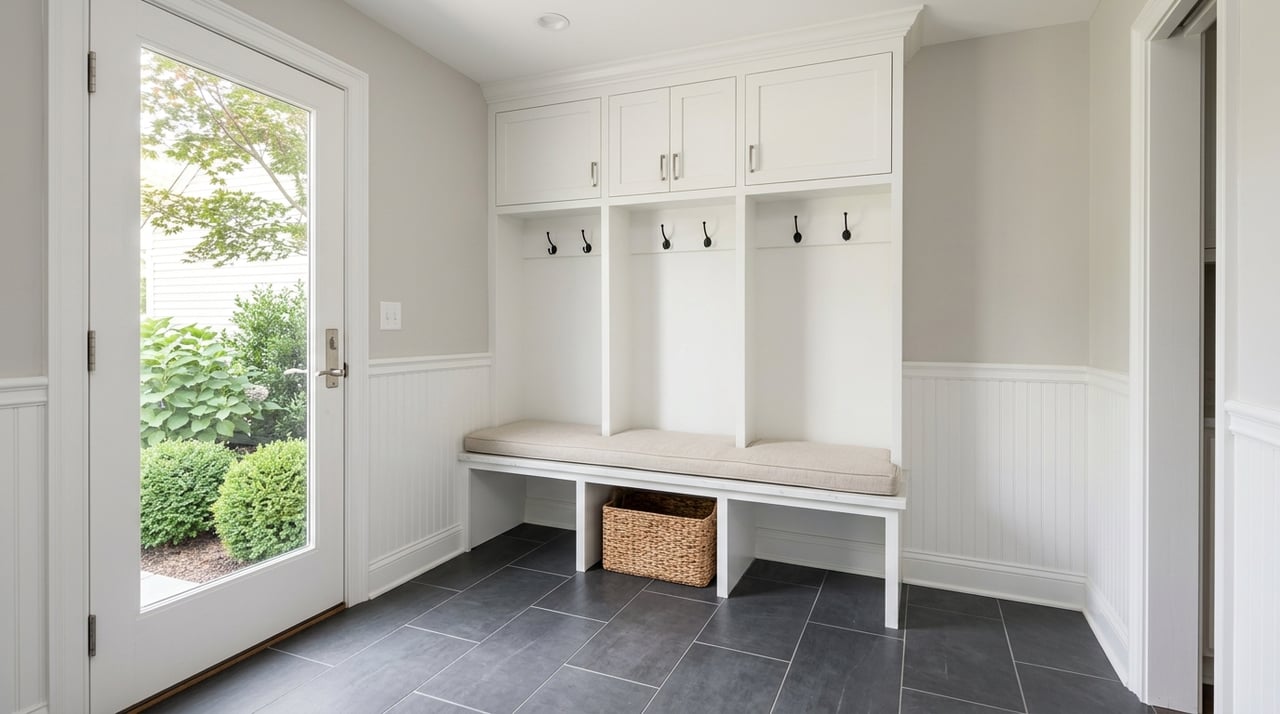
Moving Up In East Greenwich: Options For Growing Families
July 2, 2026
July 2, 2026
Need more room, but do not want to leave East Greenwich? You are not alone. Many growing households reach a point where the current home no longer fits daily life, yet the idea of giving up the town’s waterfront setting, established neighborhoods, and commuter convenience feels like a big tradeoff. The good news is that you have options, and the right move often comes down to timing, budget, and priorities. Let’s dive in.
East Greenwich is an established ownership market, and that matters when you are planning your next step. The town’s July 1, 2025 population estimate is 14,790, about 24.4% of residents are under 18, and 83.5% of housing units are owner-occupied. That points to a community where many households put down roots and stay for the long term.
It is also a relatively high-cost market. Census figures show a median owner-occupied home value of $671,700 and median monthly owner costs with a mortgage of $3,885. If you are moving up here, you are usually not just buying more square footage. You are buying into a location that many buyers continue to compete for.
The lifestyle piece is important too. The town highlights Greenwich Cove, marinas, waterfront dining, and the historic Hill & Harbor area as part of East Greenwich’s appeal. For you, that can mean weighing a larger home and yard against staying close to the walkable village and waterfront feel.
East Greenwich does not have endless new inventory coming online. A 2025 RIHousing chapter reports 5,598 housing units in town, with a median year built of 1981. It also notes 4,603 single-family homes and just 117 multi-family buildings.
That helps explain why so many move-up decisions happen within the existing housing stock. Only 11.3% of East Greenwich housing was built from 2000 to the present, and much of the land area is limited to single-family use. In practical terms, waiting for a large wave of new construction is usually not the best plan here.
The local housing profile also lines up with what growing households often need. Owner-occupied homes are typically 3 to 4 bedrooms, while renter-occupied homes are usually 1 to 2 bedrooms. If your household needs more bedrooms, a playroom, guest space, or a home office, you will likely be shopping in the resale market for a detached home.
East Greenwich offers more range than many buyers expect, but the options are segmented. Current listings show condos and townhomes around $297,000 to $449,900. Detached homes commonly sit around $799,900 to $1.2 million, while larger-lot and upper-end homes can range from about $1.35 million to nearly $2.0 million.
That means your move-up path may look very different depending on where you are starting. If you currently own a condo or smaller single-family home, your next purchase could involve a substantial jump in both monthly payment and cash needed at closing. If you already own in town, built-up equity may give you more flexibility.
Here is a simple way to think about local price bands:
| Price band | What you may find |
|---|---|
| About $297,000 to $449,900 | Condos and townhomes |
| About $799,900 to $1.2M | Typical detached move-up homes |
| About $1.35M to nearly $2.0M | Larger-lot and upper-end properties |
Inventory at each level can shift, so your best strategy is to match your must-haves to the part of the market that fits your budget now, not the market you wish existed.
One of the biggest surprises for move-up buyers is how much pricing can vary within the same town. Realtor.com local market data places Downtown East Greenwich around $614,900, Potowomut around $554,450, Glenwood around $520,000, Meadowbrook Farms around $787,000, Cowesett around $839,900, and Frenchtown around $2.087 million.
This is why neighborhood selection matters just as much as square footage. In one part of town, your budget may stretch to more interior space or lot size. In another, you may be paying more for location, setting, or housing style.
For many families, the right answer is not simply the biggest house possible. It is the home that best balances space, daily routine, commute, and overall monthly cost. A local strategy matters because East Greenwich is not one uniform market.
If you are moving up in East Greenwich, speed and pricing discipline both matter. Realtor.com’s market dashboard shows a median listing price of $899,900, a median sold price of $737,000, 89 active listings, and 29 median days on market in May 2026. Homes also sold at about 99% of list price on average.
That tells you a few things. First, desirable homes can move quickly enough that waiting too long may cost you options. Second, buyers are generally paying close to asking price, so there may be less room to bargain than you hope.
For your own home sale, these conditions can also work in your favor. If your current property is priced and presented well, a strong market can help you unlock equity for the next purchase. That is especially important when your move-up budget depends on proceeds from your sale.
For many growing households, the move-up decision is not just about bedrooms. East Greenwich Public Schools includes six schools serving PK through 12, with two lower elementary schools, two upper elementary schools, one middle school, and one high school. The district serves roughly 2,543 students and reports a 93.4% four-year graduation rate.
School structure often shapes where and when families want to move, but it is only one part of the picture. The town’s mean travel time to work is 24.9 minutes, which supports East Greenwich’s role as a commuter base as well as a place to settle in long term.
If you are juggling pickup schedules, office days, and a need for more living space, your move should support how you actually live now. The best home on paper is not always the best fit for your week.
Some move-up buyers assume they can sell first, rent for a few months, and shop without pressure. In East Greenwich, that backup plan may be harder than it sounds. Current market data shows a median rent of $2,900 and only 8 rental listings.
The town’s housing chapter also reports that 54% of renters are cost-burdened, compared with 20% of homeowners. For a larger household, finding a short-term rental with enough space, in the right location, at a manageable cost can be difficult.
That does not mean renting is impossible. It means you should treat it as a limited option, not an easy default. If your plan depends on a rental bridge, build that search into your timeline early.
This is often the biggest decision in a move-up plan. Selling first can free up your equity, reduce financial risk, and make your purchase budget clearer. Buying first can help you avoid temporary housing, but it may mean carrying two mortgages for a period.
In East Greenwich, there is no one-size-fits-all answer. The right sequence depends on your savings, equity position, comfort level, and how flexible your current living situation is. In a market where homes are selling near list price, a coordinated plan can make a big difference.
A practical way to compare the two paths is to ask:
A local move-up strategy is often less about picking the “perfect” sequence and more about reducing stress at each step.
Monthly cost is about more than principal and interest. East Greenwich’s FY2026 residential tax rate is $15.57 per $1,000 of assessed value. For comparison, Warwick is at $12.70 and North Kingstown is at $11.04.
Using the current median sold price of $737,000, that East Greenwich tax rate implies roughly $11,475 in annual property tax before exemptions or assessment differences. That is an estimate, but it is a useful benchmark when you are comparing homes or nearby towns.
A home that seems affordable at first glance may feel different once taxes are added into the monthly carry. This is one reason a move-up search should look at total payment, not just sale price.
If your East Greenwich wishlist and budget are not lining up, it can help to compare nearby markets. Realtor.com market data shows median listing prices of $449,900 in Warwick, $475,000 in East Providence, $524,900 in Cranston, $575,000 in Coventry, and $849,900 in North Kingstown.
Those numbers show that some nearby towns may offer a lower entry point, while North Kingstown is closer to East Greenwich in price. For some buyers, that creates a meaningful choice between staying in East Greenwich with possible compromises or expanding the search area for more space.
That comparison is not just about price. It is about whether your next move should prioritize town, home size, lot, commute, or monthly budget. When you know your top three priorities, the decision usually gets clearer.
The families who feel best about their move are usually the ones who start planning before they need to move. That means understanding your current home value, estimating your likely proceeds, reviewing your target price band, and mapping out a realistic timeline.
It also means staying grounded in what East Greenwich really offers. This is a market with limited new supply, a strong ownership base, and meaningful variation by neighborhood and price point. If you prepare early, you can make confident decisions instead of rushed ones.
When you are ready to explore your options, a local guide can help you weigh timing, budget, and neighborhood fit so your next move supports both your home life and your finances. To start with a personalized strategy for East Greenwich, connect with Renee Moussally.
Stay up to date on the latest real estate trends.

Discover some of the best bakeries in Providence, Rhode Island, from flaky croissants and European-style pastries to fresh artisan loaves and traditional Italian and P… Read more

Discover Rhode Island’s haunted tours and Halloween attractions for 2026, from lantern-lit ghost walks and eerie river cruises to haunted trails, historic legends, and… Read more
Discover what first-time buyers need to know about buying a condo in Rhode Island, from monthly association fees and financing to condo rules, inspections, insurance, … Read more

Discover the best indoor activities in Rhode Island for rainy days, from fascinating museums and interactive exhibits to family-friendly attractions, escape rooms, and… Read more

Discover the best pumpkin festivals and fall events in Rhode Island this October, featuring pumpkin decorating, glowing jack-o'-lantern displays, family activities, fa… Read more

Discover some of the best scenic drives in Rhode Island this fall, from winding country roads and colorful forests to coastal routes, historic towns, and beautiful New… Read more
Discover what’s driving buyer demand in East Greenwich as homes spend less time on the market despite a recent shift in median sale prices.

Discover 10 reasons people love calling Rhode Island home, from coastal living and charming communities to outdoor recreation, local culture, and easy access to everyt… Read more
Renee can offer real-world insight and advice based on years of local market experience, Work with Renee Today!