Loft And Mill Living In Providence: Style, Spaces And Locations
July 16, 2026
July 16, 2026
Ever walk into a home and instantly feel the story in the walls? That is part of the appeal of loft and mill living in Providence. If you are curious about where to find these spaces, what they actually look like, and whether the lifestyle fits you, this guide will help you sort through the options and understand what makes this corner of the Providence market so distinct. Let’s dive in.
In Providence, loft and mill living usually starts with adaptive reuse. Instead of tearing down older industrial or commercial buildings, many properties have been converted into apartments or condominiums.
That matters because these homes often keep parts of the original structure and character. In many parts of the city, especially mixed-use areas, former mill and factory buildings now support residential living alongside commercial or office space.
Providence has a long history of this pattern. Local planning materials point to downtown, commercial corridors, transitioning manufacturing areas, and parts of the waterfront as places where these conversions fit into the city’s broader development approach.
Olneyville is one of the clearest examples. After zoning changes allowed residential uses in the M1 industrial zone, many industrial complexes there began converting to housing around 2000, often with support from historic tax credits.
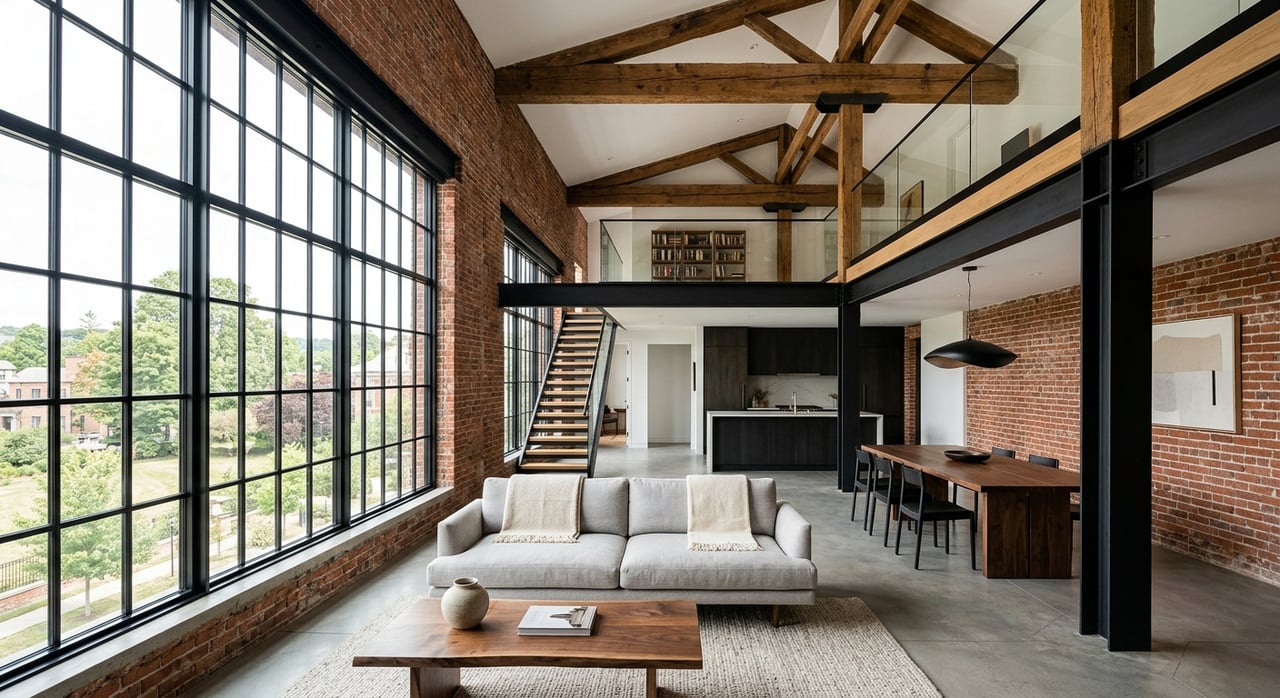
If you love character, this housing style can feel very different from a standard apartment or newer condo building. Many Providence loft and mill conversions keep visible industrial details instead of covering them up.
Common features include:
These design traits show up across well-known local examples. Buildings such as Pearl Street Lofts, Rising Sun Mills, and Pilgrim Lofts all highlight some version of brick, hardwoods, oversized windows, and soaring ceiling height.
The result is often a space that feels open, flexible, and full of texture. If you prefer homes with architectural personality, loft and mill properties can offer something that newer construction may not.
One of the biggest things to know is that "loft" does not describe one exact layout. In Providence, this category includes everything from compact micro-lofts to larger duplex-style homes.
Depending on the building, you may find:
That range is important if you are comparing options. A Downcity micro-loft may offer a very different experience from a larger mill apartment on the West Side, even if both fall under the loft label.
Amenities in Providence loft and mill properties are not one-size-fits-all. Some buildings focus mostly on the architecture and location, while others offer a broader package of on-site features.
Common amenities in local examples include parking, fitness space, secure access, central air, in-unit laundry, shared outdoor areas, and ground-floor neighborhood uses like cafés or retail. Some properties also include indoor or outdoor parking options and shared courtyards.
That is why it helps to look at each building individually. Two loft properties may have similar design style but very different day-to-day convenience.
If you are looking for loft and mill spaces in Providence, a few areas stand out more than others. The strongest concentration is in Downtown, Downcity, and the Jewelry District.
Providence planning documents describe downtown as both a residential and commercial district. They also note that some additional office-to-housing conversions may still happen there, although earlier conversion waves and building layouts limit what remains feasible.
The Jewelry District is another major area for this housing type. The district contains many industrial structures and factories built between 1830 and 1930, which helps explain why loft-style projects and smaller micro-loft concepts have appeared there.
A second major cluster runs through the West Side mill corridor. This includes Olneyville, the Federal Hill edge, the Armory District, and nearby Broadway and Valley-Promenade areas.
This part of Providence offers some of the city’s clearest mill-conversion examples. Properties tied to these areas show that loft living is not limited to the downtown core.
You will also find examples in the West End. That wider spread can give you more flexibility if you like the style of loft living but want to compare different parts of the city.
While Providence loft living shares some common design themes, location still shapes your experience. Downtown and Downcity often appeal to people who want a more central urban setting and access to a mixed residential and commercial environment.
The Jewelry District stands out for its collection of historic industrial structures and its role in newer mixed-use residential ideas. On the West Side, areas like Olneyville and the Armory District reflect Providence’s mill-conversion history in a different way, often tied to older industrial corridors and neighborhood commercial activity.
The best fit depends on your priorities. You may care most about building style, unit size, nearby services, parking, or access to different parts of the city.
This lifestyle tends to work best for people who want character, walkability, and urban convenience more than a conventional suburban layout. Providence planning materials connect mixed-use areas with higher residential density, transit connections, and nearby services.
That often makes loft living a good match if you want to be close to restaurants, parks, downtown destinations, or neighborhood retail. It can also work well if you like open space that can flex with your routine.
In local examples, these communities have been described as serving a mix of residents and uses, including artists, entrepreneurs, families, and small businesses. The key takeaway is not a specific type of resident, but a shared preference for city-oriented living and distinctive architecture.
Before you decide on a loft or mill property, it helps to look past the label. In Providence, the category includes rentals, condominiums, micro-lofts, and mixed-use properties, so your experience will depend heavily on the building itself.
Ask practical questions such as:
It is also smart to think about how you use space. Open loft plans can feel dramatic and bright, but they may function differently from more traditional room-by-room layouts.
Loft and mill living in Providence is not a single product type. It is a spectrum of buildings, sizes, ownership models, and neighborhood settings.
That is where local guidance can make a real difference. If you are comparing a condo conversion in one part of Providence with a rental-oriented mill property in another, the right choice comes down to your budget, lifestyle, and long-term plans.
Whether you are buying, selling, relocating, or exploring Providence for the first time, it helps to work with someone who understands how these niche properties fit into the broader local market. If you want help narrowing down the right Providence loft or mill-style option, reach out to Renee Moussally for local insight and personalized guidance.
Stay up to date on the latest real estate trends.

Discover some of the best bakeries in Providence, Rhode Island, from flaky croissants and European-style pastries to fresh artisan loaves and traditional Italian and P… Read more

Discover Rhode Island’s haunted tours and Halloween attractions for 2026, from lantern-lit ghost walks and eerie river cruises to haunted trails, historic legends, and… Read more
Discover what first-time buyers need to know about buying a condo in Rhode Island, from monthly association fees and financing to condo rules, inspections, insurance, … Read more

Discover the best indoor activities in Rhode Island for rainy days, from fascinating museums and interactive exhibits to family-friendly attractions, escape rooms, and… Read more

Discover the best pumpkin festivals and fall events in Rhode Island this October, featuring pumpkin decorating, glowing jack-o'-lantern displays, family activities, fa… Read more

Discover some of the best scenic drives in Rhode Island this fall, from winding country roads and colorful forests to coastal routes, historic towns, and beautiful New… Read more
Discover what’s driving buyer demand in East Greenwich as homes spend less time on the market despite a recent shift in median sale prices.
Renee can offer real-world insight and advice based on years of local market experience, Work with Renee Today!