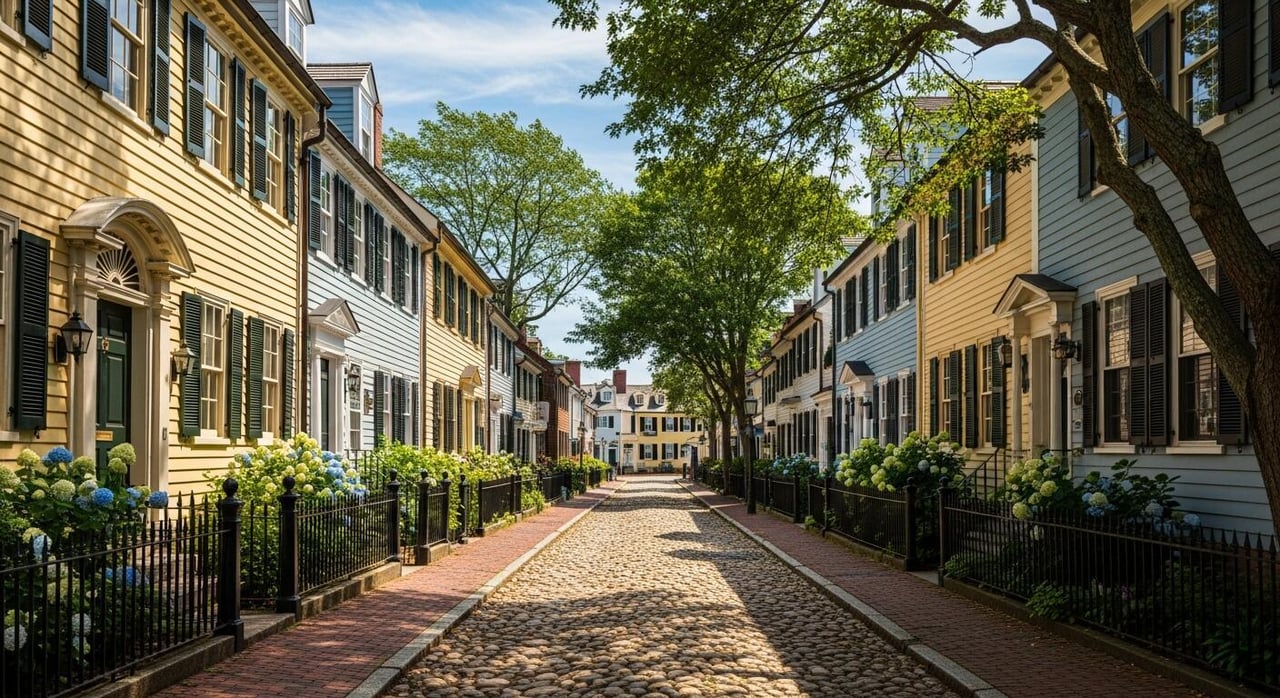
What Buying In Newport's Historic District Really Costs You: Time, Not Just Money
August 27, 2026
August 27, 2026
A listing photo of a Point Street colonial with "original details throughout" reads like a selling point. It is, and it also means that some exterior changes—such as repainting the door, swapping a window, or adding a rear dormer—may require approval from Newport's Historic District Commission, which meets once a month, according to the Newport HDC meeting materials. The number that actually matters when you buy a historic Newport property is not your renovation budget. It is the date of the next second Tuesday.
The City of Newport established its Historic District Commission by city ordinance in 1965, under authority granted by Rhode Island's Historical Area Zoning statute. Since then, the city council has kept adding to the map. What started as a downtown designation now covers roughly four in ten acres of Newport, and more than half of the city's individual parcels sit inside one local historic district or another, spanning downtown, the Point, Historic Hill, the Kingscote-Bellevue Avenue district, and the Old Beach Road district near Easton's Beach.
That framing matters because buyers tend to think of historic-district rules as something that applies to the obviously grand houses on Bellevue Avenue, not the modest 1920s cottage two streets back from the harbor. In practice, for a property inside one of these boundaries, exterior changes visible from a public street or way may require a Certificate of Appropriateness (a COA) before a building permit gets issued; the application packet lists minor exceptions.
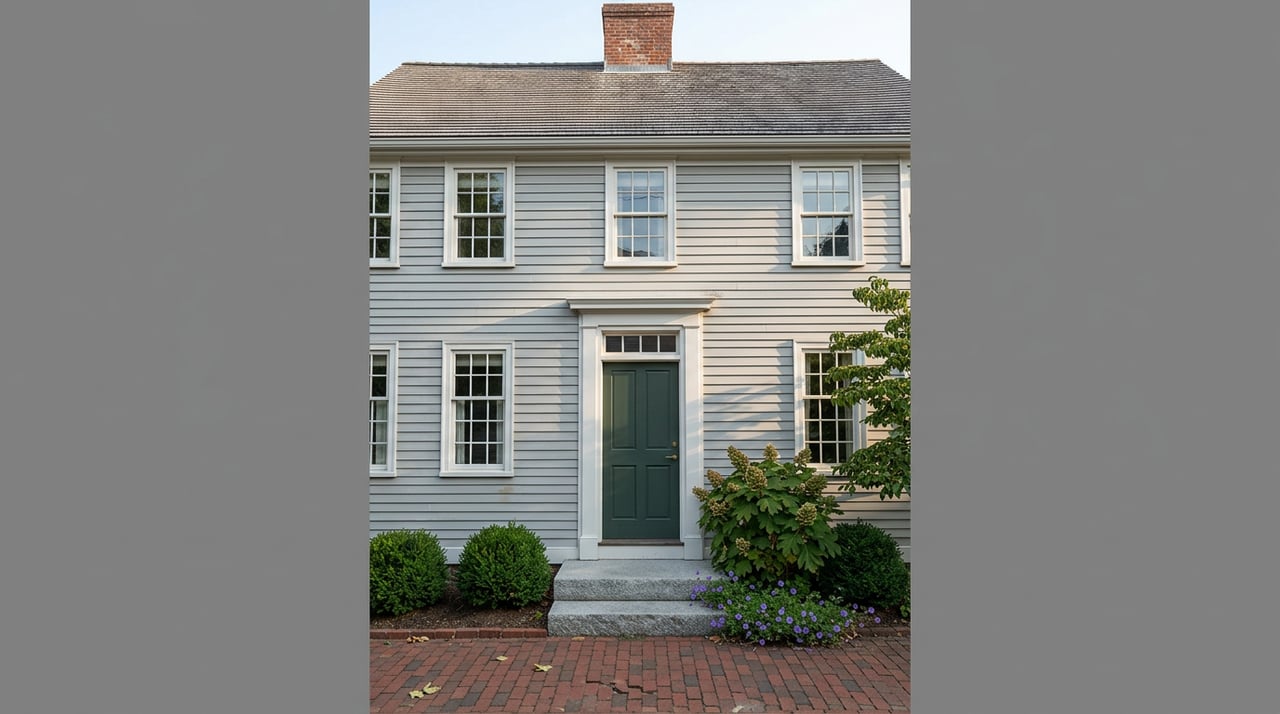
The exterior work that may require HDC sign-off is broader than many buyers assume. Window replacements, door swaps, new siding, roofing changes, fences, and additions may require a COA, subject to the minor exceptions listed in the application packet. Paint color may also require review when it strays from a palette the commission considers appropriate to the house's architectural period.
The practical effect is that a change most homeowners elsewhere treat as a Saturday afternoon project, picking a new front door color, can become a line item on an application. That is not a reason to avoid a historic-district purchase. It is a reason to build the approval calendar into your renovation plan before you write an offer, not after you close.
Here is the mechanic that catches people off guard. Newport's HDC holds regular meetings on the second Tuesday of each month at 6:30 p.m., and the deadline to submit a complete application for that meeting is the second Tuesday of the prior month. Miss it, even by a day, and your project waits for the next cycle. Show up unrepresented and the commission dismisses the case outright, which means starting the paperwork over.
Once a project is approved, the Certificate of Appropriateness is valid for one year, and can be extended with a written request before it expires. Any change to the approved plans, including changes forced by a separate zoning or Coastal Resources Management Council review, has to go back through the commission before work continues. The HDC application itself asks directly whether the project needs other approvals from zoning or CRMC, which is a reminder that a waterfront historic property can stack two or three review processes on top of each other before a shovel goes in the ground.
None of this is designed to be an obstacle course. It exists so that a buyer walking down Clarke Street or Poplar Street in ten years still sees a Newport that looks like Newport. But if you are underwriting a purchase against a fixed close-and-renovate timeline, a missed monthly deadline is a real cost, measured in carrying costs and contractor scheduling, not just inconvenience.
The commission's February 2026 meeting agenda gives a useful snapshot of what a "typical" application looks like in practice. Applicants that month included a full exterior restoration at 32 Clarke Street, replacing an asbestos roof with yellow cedar shingles and restoring the original windows. A Greenough Place property owner proposed raising an existing carriage house onto a new foundation and converting the upper floor into a dwelling unit, a project detailed enough that the commission continued it to the following month for further review. A Poplar Street application to move a house off the property line and construct an addition was likewise continued rather than decided the same night. On Guerney Court, an owner sought approval to replace vinyl replacement windows with new wood windows and swap several doors, straightforward on paper but still requiring full commission sign-off because it touches the street-facing elevation.
The pattern across these examples: even routine-sounding requests, raising a structure a few feet, moving a building line, adding a dwelling unit, often get continued to the following month rather than approved on the first pass. If you are counting on a six-week renovation to have your historic-district purchase move-in ready, the commission's own recent agenda suggests building in more room than that.
Rhode Island has several cities with their own historic district commissions, and the process is not identical from one to the next. Rockhouse Construction reports that Providence's Historic District Commission, for comparison, generally reviews complete applications within four to eight weeks depending on project complexity, with minor work using identical materials sometimes qualifying for faster administrative approval by commission staff rather than a full public hearing. Newport's process runs on a stricter monthly cycle with no staff-level shortcut described in the city's own application materials.
Newport HDC | Providence HDC | |
|---|---|---|
Meeting cadence | Second Tuesday of each month, 6:30 p.m. | Monthly public hearings |
Application deadline | Second Tuesday of the prior month | Submitted in advance of the hearing date |
Typical timeline | One full monthly cycle minimum, often more for complex work | Roughly 4 to 8 weeks depending on project |
Administrative shortcut | Not described in city application materials | Minor identical-material repairs may qualify for faster staff-level approval |
Certificate validity | One year, extendable by written request | Not specified in available city materials |
If you are cross-shopping a historic property between the two cities, this is the kind of difference that never shows up in a median price comparison but changes how soon you can actually live in the house the way you pictured it.
Does every old house in Newport need HDC approval for renovations? The city's GIS portal is the way to confirm boundary status for a specific address, and a list of minor exceptions to HDC review is included in the application packet for anyone unsure whether their scope of work qualifies.
What happens if I buy a house where the previous owner did exterior work without approval? The city's own guidance treats unpermitted historic-district work as a zoning violation, which can mean a stop-work order, fines, or an order to restore the property to its prior condition at the owner's expense. Confirming COA history before you close is worth the extra step.
If you are weighing a historic Newport property against something newer in Middletown or Portsmouth, the renovation calendar is not a footnote, it is part of the real cost of the house. Renee Moussally works with buyers across Newport County who want that math done before they make an offer, not after. Reach out for a Get Your Free Market Snapshot and a straight answer on what a specific address will actually require.
This article is general information, not legal, tax or financial advice. Consult a qualified professional about your situation.
Stay up to date on the latest real estate trends.

Discover some of the best bakeries in Providence, Rhode Island, from flaky croissants and European-style pastries to fresh artisan loaves and traditional Italian and P… Read more

Discover Rhode Island’s haunted tours and Halloween attractions for 2026, from lantern-lit ghost walks and eerie river cruises to haunted trails, historic legends, and… Read more
Discover what first-time buyers need to know about buying a condo in Rhode Island, from monthly association fees and financing to condo rules, inspections, insurance, … Read more

Discover the best indoor activities in Rhode Island for rainy days, from fascinating museums and interactive exhibits to family-friendly attractions, escape rooms, and… Read more

Discover the best pumpkin festivals and fall events in Rhode Island this October, featuring pumpkin decorating, glowing jack-o'-lantern displays, family activities, fa… Read more

Discover some of the best scenic drives in Rhode Island this fall, from winding country roads and colorful forests to coastal routes, historic towns, and beautiful New… Read more
Discover what’s driving buyer demand in East Greenwich as homes spend less time on the market despite a recent shift in median sale prices.

Discover 10 reasons people love calling Rhode Island home, from coastal living and charming communities to outdoor recreation, local culture, and easy access to everyt… Read more
Renee can offer real-world insight and advice based on years of local market experience, Work with Renee Today!