What A Coventry Listing Price Doesn't Tell You About Septic, Sewer, And Land
August 20, 2026
August 20, 2026
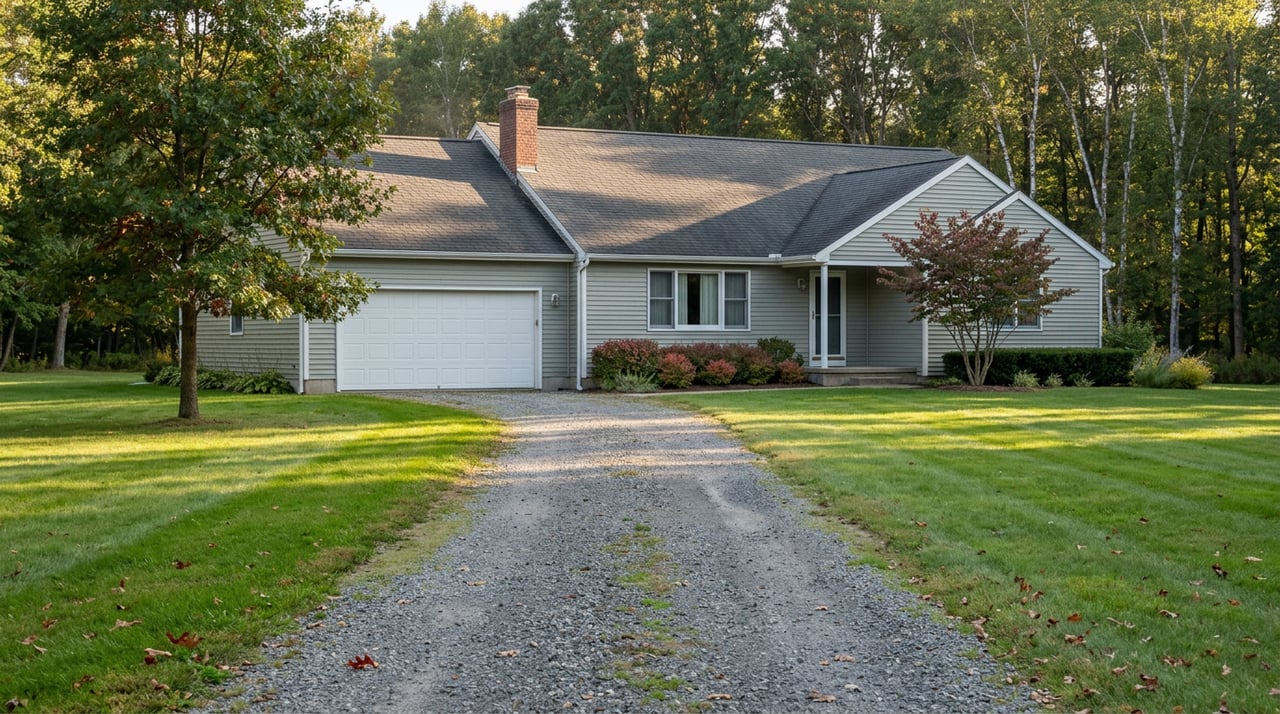
Two houses in Coventry can list within a few thousand dollars of each other and still require completely different budgets to actually close on. Not because of the kitchen, or the roof, or the school bus route. Because of what's happening under the yard.
Coventry is Rhode Island's largest town by land area, and that size is doing more work in its housing market than most buyers realize. A chunk of the town runs on municipal water and sewer, the same infrastructure you'd expect walking through a denser suburb. Another chunk, mapped by the town as Rural Residential, was built specifically to stay off public utilities. Both zones show up in the same MLS search, at the same price points, and only one of them comes with a wastewater bill you can predict.
Coventry's zoning code splits residential land into districts with very different relationships to public infrastructure. In the higher-density residential districts, the town's own code describes public water as generally available and a 20,000 square foot minimum lot for new development, with public sewer already in place or planned. The Rural Residential district, labeled RR5, is defined the opposite way: areas not served by public facilities, meant for large estates, agricultural uses, and low-intensity activity, with a density kept deliberately thin to preserve what the ordinance calls the rural character of the town.
A buyer comparing two three-bedroom capes at $420,000 may see square footage, lot size, and perhaps a photo of a shed. The utility setup is another detail to check for each property: one may have a private well and septic system, while another taps into the town main.
Public-water residential districts | Rural Residential (RR5) | |
|---|---|---|
Water source | Public water main | Private well |
Wastewater | Public sewer where available, or septic | Septic or cesspool, no public sewer |
Minimum lot size | 20,000 square feet | Larger, low-density lots by design |
Intent of the zone | In-town neighborhood growth | Preserve rural land and agricultural use |
The gap matters because Rhode Island treats septic systems as a live legal issue at the moment of sale, not a background maintenance detail.
If a Coventry property still has a cesspool rather than a conventional septic system, state environmental rules do not let that pass quietly from one owner to the next. The Rhode Island Department of Environmental Management is direct about it:
the system must be replaced within one year of the date of the property transfer
That single sentence turns a home inspection detail into a closing table number. A conventional replacement system typically runs $10,000 to $18,000 depending on soil conditions and lot constraints, according to RIDEM's own guidance. Before that, someone has to figure out what's actually buried in the yard, which means hiring a licensed septic system designer or registered inspector, at a cost RIDEM puts at roughly $75 to $250, plus another $150 to $200 if the tank needs pumping to inspect it properly.
Age offers a rough shortcut. Systems installed after 1970 are generally not cesspools, since state rules banned new cesspool installations that year. Anything older is worth asking about directly, and in a town where a meaningful share of the state's estimated 70,000 remaining cesspool systems are almost certainly sitting in older, unsewered neighborhoods, that question is not paranoid. It's the first thing a buyer's agent should be pulling records on before an offer goes in, not after.
Coventry's own comprehensive plan has flagged this as more than a paperwork issue. Town planning documents have specifically called out septic systems and soil erosion as threats to the aquifer beneath the community, tied to the high number of systems installed before current standards existed and to soil conditions in parts of town that are more prone to system failure. That's not a hypothetical risk. The zoning code identifies preserving the town's rural character as the reason for RR5's low density.
Coventry isn't frozen in a well-and-septic past. The town's Sewer Authority has an active extension project underway, the Coventry High School Sewer Extension, with engineering firm Fuss and O'Neill working through preliminary reports and alternatives analysis for expanding municipal wastewater service into new pockets of town. The town's updated 2026 comprehensive plan also notes that several residential subdivisions and developments were under construction across eastern Coventry as of this year, generally in the direction of the areas closer to existing infrastructure.
That means the well-versus-sewer line isn't static. A property that relies on a private system today may sit closer to a future connection than one three streets over. It also means a buyer can't assume that "Coventry" as a search term means one thing. The eastern, historically mill-village side of town, built up along the Pawtuxet River as it runs from Tiogue Lake toward the Providence River, has a different infrastructure story than the wooded western sections zoned RR5 for exactly the reason that they were never meant to fill in that densely.
As of mid-2026, Coventry's resale market has been moving quickly. Homes have been selling at a median sold price around $390,000, closing at roughly 99.5 percent of list price, with only about 1.4 months of inventory on hand and a typical time on market in the mid to high thirties in days. That combination, tight supply, prices holding close to asking, and a fast clock, describes a market where buyers feel pressure to write an offer before they've fully worked through diligence.
That pressure is exactly where the septic question gets skipped. Nobody wants to be the buyer who lost a house because they asked for two extra weeks to pull DEM records. But in Coventry specifically, that question is worth the friction. A house priced identically to its neighbor, but sitting on the RR5 side of a boundary line with an aging cesspool, is not the same purchase. It's worth discussing the replacement cost early, since it can be easy to miss during a home inspection contingency window with days left on the clock.
Does every home in Coventry have a well and septic system? No. Coventry's residential districts include both public-water, public-sewer neighborhoods and Rural Residential areas built specifically around private wells and septic systems. Which one applies depends on the parcel, not the town as a whole.
Who pays to replace a cesspool, the buyer or the seller? Rhode Island law puts the one-year replacement clock on whoever owns the property after the transfer. The cost is a point to discuss with the seller.
How do I find out if a specific property has a cesspool versus a conventional septic system? A licensed septic system designer or registered inspector can make that determination, and RIDEM maintains records for systems permitted after 1992 that can be searched by address.
Coventry's price tag tells you what a house costs to buy. It doesn't tell you what it costs to own for the first year, and in a town built on this particular patchwork of zoning, that second number depends entirely on which side of an invisible line your future address falls on. If you're comparing Coventry properties and want someone to walk the zoning map and the septic history with you before you write an offer, Renee Moussally can pull that together as part of your free market snapshot, so the number you're negotiating against is the real one.
This article is general information, not legal, tax or financial advice. Consult a qualified professional about your situation.
Stay up to date on the latest real estate trends.

Discover some of the best bakeries in Providence, Rhode Island, from flaky croissants and European-style pastries to fresh artisan loaves and traditional Italian and P… Read more

Discover Rhode Island’s haunted tours and Halloween attractions for 2026, from lantern-lit ghost walks and eerie river cruises to haunted trails, historic legends, and… Read more
Discover what first-time buyers need to know about buying a condo in Rhode Island, from monthly association fees and financing to condo rules, inspections, insurance, … Read more

Discover the best indoor activities in Rhode Island for rainy days, from fascinating museums and interactive exhibits to family-friendly attractions, escape rooms, and… Read more

Discover the best pumpkin festivals and fall events in Rhode Island this October, featuring pumpkin decorating, glowing jack-o'-lantern displays, family activities, fa… Read more

Discover some of the best scenic drives in Rhode Island this fall, from winding country roads and colorful forests to coastal routes, historic towns, and beautiful New… Read more
Discover what’s driving buyer demand in East Greenwich as homes spend less time on the market despite a recent shift in median sale prices.

Discover 10 reasons people love calling Rhode Island home, from coastal living and charming communities to outdoor recreation, local culture, and easy access to everyt… Read more
Renee can offer real-world insight and advice based on years of local market experience, Work with Renee Today!